Google AI Mode Links Update: How to Be the Link Google Shows
Google's 15 October 2026 AI Mode links update puts more links higher in AI answers. What it means for a NZ business that wants to be the link Google shows.
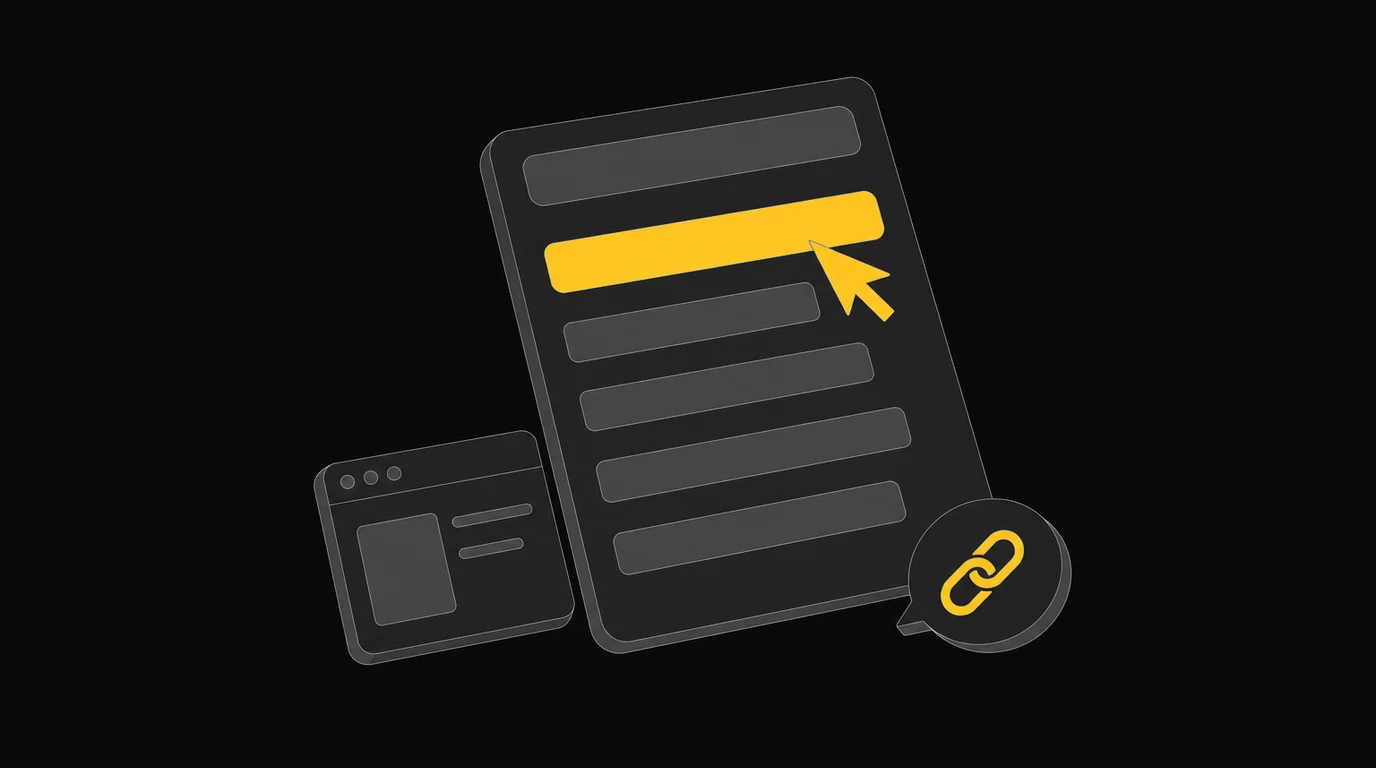
On 15 October 2026 Google announced that AI Mode and AI Overviews will show more links, and show them higher up in the answer. It is also testing a block at the top of a response that surfaces the one or two official pages where you can complete a specific task. For a New Zealand business, the practical meaning is simple: the page that does the job (book, quote, price, apply) is the page I would expect to earn a visible link, so that page needs to exist, load fast and answer the question in its first two sentences. Google’s own guidance says there are no special optimisations for AI features, so the work is good pages built for specific searches, plus a way to tell whether it is paying off.
Google’s announcement does not say whether these changes have reached New Zealand yet. Below is what it says, what it leaves out, and what I would do about it.
What Did Google Change on 15 October 2026?
Google’s post, by Hema Budaraju, VP of Product Management, lists five changes to its AI search features:
- More inline links, placed higher. Google defines inline links as “links embedded in words or phrases in an AI response”. It says it has made “continued and substantial increases to the presence of inline links” and is launching updates “to show inline links higher up in responses more frequently”.
- A section at the top for official pages (a test). In Google’s words: “Sometimes, there are only one or two official places on the web to complete a specific task or get the exact info you need.” It will test “a dedicated section at the top of a response, with context about why each link is useful”.
- News carousels in more places. Carousels for timely articles are rolling out “to additional locations and languages globally”, and they highlight a person’s Preferred Sources.
- Better related links. The links at the end of some AI responses get “image thumbnails and a more clickable design”.
- Creator profiles (a test). Google started testing clickable creator and publisher names on video results that link to their Search profiles in AI Mode.
Google also says the number of people using Preferred Sources “has grown by more than 7x since the start of the year”, without giving a user count.
Source: Google, “More ways to connect with the web from Search”, 15 October 2026.
Is the Update Live in New Zealand?
Google has not said. The announcement names no countries or languages. The only geography in it is that the news carousels are rolling out to “additional locations and languages globally”. The top-of-response section and the creator profiles are both described as tests, with no rollout dates.
AI Mode itself has been available in New Zealand, in English, since Google’s New Zealand announcement of 22 August 2025. Whether each of the October features has reached it is a separate question, and nobody outside Google can answer it for you today. The useful move is to run your own important searches in AI Mode and record what appears (more on that below). For the wider picture, see our earlier post on Google AI Mode and what New Zealand businesses need to know.
Which Pages Could the “One or Two Links” Section Favour?
Pages that let someone finish a task are the likeliest candidates, but Google has not published how it chooses them, so this part is my reading, not a confirmed rule.
Google says the section “expands on what we already do today to show links front and center when you’re looking to go to a particular site”. If you are the business that performs the task, your own page is the official place, and the question is whether that page is clear about the task. A page that says “We offer a range of services, contact us” gives a search system very little to attach a reason to. A page that says what you do, where, what it costs and how to book gives it a lot. I would not build a strategy around an unfinished test, but task pages convert visitors from every other source too.
What Does a Good Task Page Look Like?
A good task page puts the answer and the action first, before any story about your company. Discount Taxis is our clearest example.
Discount Taxis, one of the brands in the NZ Taxi Vans network, sells fixed-fare airport transfers against rideshare apps that surge on price. We separated the pages by what people are trying to do: fixed-fare airport runs, maxi and group travel, and general Auckland taxi demand. Each page answers its own query directly, and the fare quote sits in front of the visitor straight away instead of behind a form.
The published results, from the Discount Taxis case study:
- Top 3 on Google for “taxi to Auckland airport”, a search with an estimated 880 searches a month
- 191 ranking keywords
- An estimated 39% more organic traffic
The ranking snapshot is from Google Search Console, 21 July to 16 August 2026, with search volumes from Google Ads data. These are classic Google rankings. They are consistent with the page structure working for traditional search, but they do not measure how often AI Mode links to the site.
What makes it a task page is the shape: what, how much and how to book, on one URL.
Why Might Specific Pages Beat General Ones in AI Mode?
Because AI Mode splits a question into parts and searches for each part, I would expect a page about exactly one part to have a better chance than a page that mentions everything. Google has not published a test of this, so it is my reasoning. Google’s Search Central documentation says both AI features “may use a ‘query fan-out’ technique”, which it describes as issuing multiple related searches across subtopics and data sources to develop a response. Its Search Console help page describes AI Mode in similar terms: it “groups the user’s question into subtopics and searches for each one simultaneously”.
Say someone asks AI Mode which Hamilton workshop can fix a diesel injector problem, and what it will cost. The system might search diesel injector repair, the specific engine, local workshops and price. A page called “Our Services” with one line on diesel work is a weak match for each of those. A page about diesel injector repair is a strong match for one.
That is the idea behind how we built Turbo & Diesel, a Hamilton workshop. The business does hard jobs (common rail diesel, turbochargers, DPF and EGR cleaning, hybrid batteries) but its old site presented it like a general garage. We built 28 service pages, 12 brand specialist pages for the marques Hamilton drivers actually own, and a 10-post blog answering the questions that come before a booking. The case study reports no AI Mode result and I am not claiming one. It is the structure I would want in place when Google starts picking links.
This is our standing approach to SEO: write the page for the very specific search that nobody else in your area has bothered to answer properly. A small search that ends in a booking beats a big one that never does.
How Do You Write an Answer-First Page?
Write the direct answer in the first two sentences, then the proof, then the action. That suits a person skimming on a phone and a system looking for a sentence to point to. A workable structure:
- State the answer. Use your real price, or say how it is worked out.
- Say who it is for and where. Suburbs, service area, hours.
- Show the next step. One clear button: book, get a quote, call.
- Answer the next three questions. Cost, how long, what could go wrong.
- Add proof. A review, a photo of your work, a result.
My read, and it is only a read, is that clear, self-contained sentences give an AI response something concrete to link to, and vague marketing copy does not. Google’s post does not confirm that, but writing this way costs nothing.
Make sure the basics are in order too. Google says a page must be “indexed and eligible to be shown in Google Search with a snippet” to be a supporting link, with “no additional technical requirements”. Check the page is crawlable, in your sitemap and linked from the rest of your site.
Do Preferred Sources and Creator Profiles Matter for Your Business?
For most small businesses, not yet. The carousels are for “timely articles”, so they matter if you publish news or industry commentary and not if you run a plumbing business. Creator profiles matter if you make video, and Google’s post links to how eligible creators and publishers can get started with Search profiles. If you do not make video, put the hour into a task page instead.
How Can You Measure Whether Google Links to You in AI Answers?
Use Search Console’s generative AI performance report for impressions, and your own conversion tracking for the outcome that pays. Here is what Google’s documentation says.
Google’s Search Console help page describes a Generative AI performance report. It says the report covers impressions in AI Overviews and AI Mode, that it can be grouped by page, country, date and device, and that as of 31 August 2026 it has rolled out to all websites worldwide. It also says you may not see it if your site has not received enough impressions in generative AI features.
That page describes impressions only. It does not describe click data in that report, and it does not describe a split between AI Overviews and AI Mode. For clicks, Google’s Search Central page says sites appearing in AI features “are included in the overall search traffic in Search Console”, reported “within the ‘Web’ search type”. The counting rules are:
- Clicking a link to an external page in AI Mode counts as a click.
- An AI Overview takes up a single position, and all the links inside it get that same position.
- A follow-up question in AI Mode counts as a new query.
So a rise in clicks on a page might come from AI Mode, an AI Overview, a classic result or all three, and the standard Performance report will not say which. Ask any report that claims to split clicks by AI feature how it does so.
What you can do with it:
- Check the report by page. See whether your task pages appear in AI answers at all, and which ones.
- Track the task as a conversion. Quote requests, booking clicks and calls from the page, in Google Analytics 4. This is the number that matters.
- Run your own checks. Every month, search your ten most valuable queries in AI Mode and AI Overviews, screenshot the answers, and note whether your page is linked. It is manual, and it shows what a customer actually sees.
What Would a Competitor Hesitate to Tell You?
Here is the opinion most agencies will not print. If your website has no price, no quote button and no booking path, this update is not your problem, and spending on AI search work before fixing that is a waste. I sell AI search work, and I would still tell you to fix the page first.
Google’s own guidance is that there is nothing special to do for AI features beyond good SEO. If someone sells you a separate “AI Mode package”, ask what exactly they will do that a well-run SEO programme would not. Sometimes there is a real answer, such as checking what AI tools say about you and measuring it monthly, which is what our AI SEO work does. The answer should be specific, and it should start with your pages.
What Should You Do This Month?
List the five tasks customers hire you for and check each has its own page. Rewrite the first two sentences of each so they answer the question and name the price or how it is worked out. Put one clear action above the fold. Make sure the action is tracked as a conversion in Google Analytics 4. Then open the generative AI report in Search Console and record your top ten searches in AI Mode now, so you have a baseline to compare against in January. If you want help with the page structure and the tracking, our SEO service is where that starts.
Frequently Asked Questions
How Do I Get My Website Linked in Google AI Mode?
Make sure the right page for the search exists, is indexed and can show a snippet. Google says that is the technical requirement for appearing as a supporting link, with nothing additional. Beyond that, the page needs to answer the specific question better than other pages do, and Google says meeting every requirement does not guarantee a page will be crawled, indexed or served.
What Triggers Google AI Overviews?
Google decides query by query. Its documentation says AI Overviews “are only shown when our systems determine that it is additive to classic Search, and as such, often don’t trigger”. There is no setting you can change to make one appear for your business.
How Can I Track AI Search Results?
Start with the generative AI performance report in Search Console, which Google says shows impressions in AI Overviews and AI Mode. Google describes it as impression data, so pair it with conversion tracking in Google Analytics 4 and a monthly manual check of your key searches. The report may not appear if your site has had too few impressions in these features.
Is Google AI Mode Available in New Zealand?
Yes, in English, since Google’s announcement on 22 August 2025. Whether the 15 October 2026 changes have reached New Zealand is not stated, so search in AI Mode yourself and keep a record of what you see.
Do I Need Special Schema or an AI Text File to Appear?
No. Google’s documentation says you “don’t need to create new machine readable files, AI text files, or markup to appear in these features”. It does say structured data you already use should match the visible text on the page.
Where This Leaves You
The update changes where links appear. What earns them looks the same as before: the business with the clear page for the specific job still has the best claim to the link. If you would like a second opinion on which of your pages are task pages and which are brochure pages, book a call and we will look at them together.

Written by
Jason Poonia
Jason Poonia is the founder and Managing Director of Lucid Media, helping New Zealand businesses grow online since 2018. With over 7 years delivering results for clients across New Zealand and internationally, Jason combines technical expertise with proven marketing strategies to help businesses attract more customers and build scalable systems. Background in Computer Science from the University of Auckland.