Meta's Andromeda Update (October 2026): What It Means for Your Ads
Meta rebuilt Andromeda, the system that shortlists which ads you see. Here's what changed on 28 October 2026, the results Meta reported, and what to check.
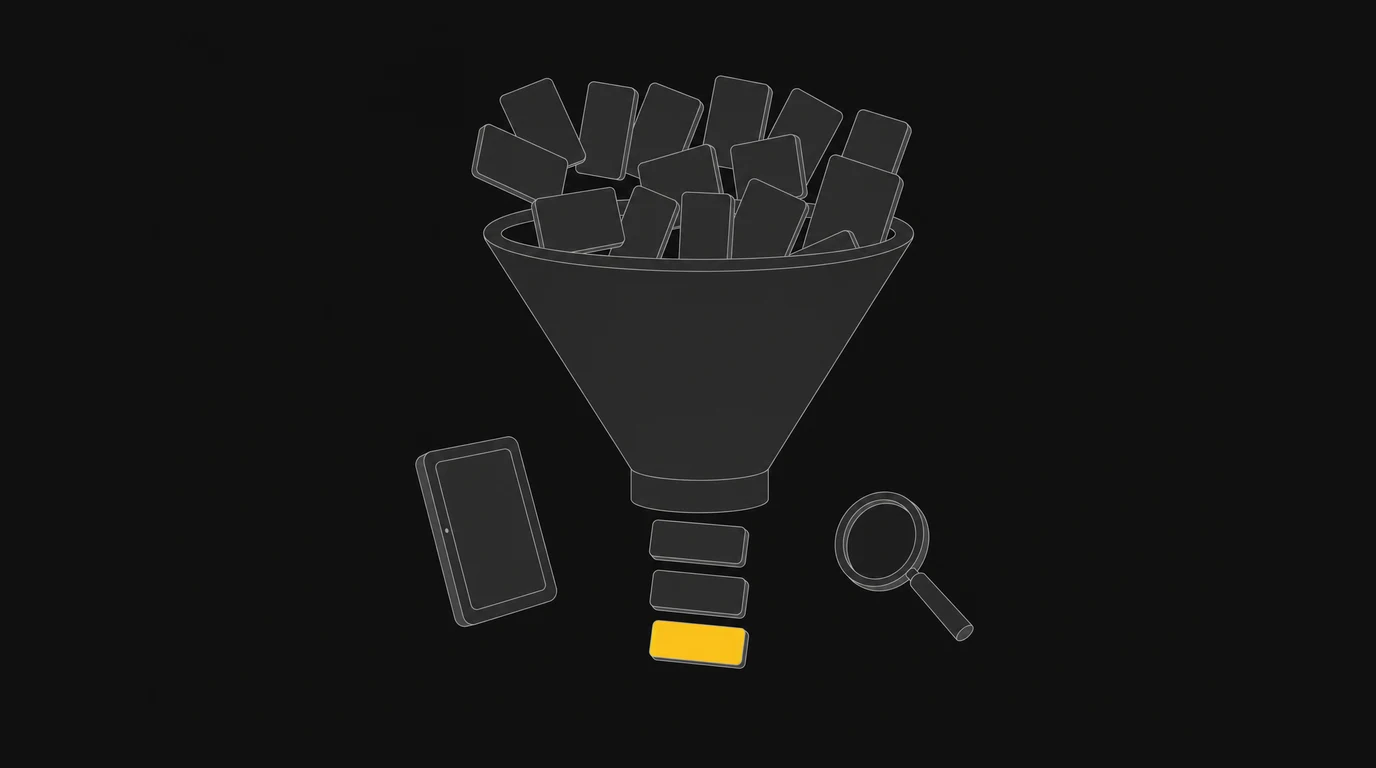
On 28 October 2026, Meta published details of a rebuilt Andromeda, the system that decides which ads are even in the running for each person on Facebook and Instagram. The short version for business owners: Meta can now consider far more ads for every person, far faster, and there is no setting to switch on. What it changes is which accounts are best placed to benefit.
If you want the background on how Meta picks an ad in the first place, start with our explainer on how the Meta ads algorithm works. This post covers what is new.
What Andromeda Does
Every time someone scrolls, Meta has to pick a handful of ads out of millions that could be shown. It does this in stages. Andromeda is the first stage, called retrieval: it narrows the whole pool of eligible ads down to a short list of strong candidates in milliseconds. A slower, more detailed ranking stage then scores that short list and picks the winner. (The ranking side is where models like Meta Lattice and Meta’s GEM sit.)
If your ad does not make Andromeda’s short list, it never reaches the ranking stage. That is why retrieval matters more than its technical name suggests.
What Changed on 28 October 2026
Meta Engineering’s post, Meta Andromeda: Powering the Next Generation of Ads Retrieval, describes a rebuild of both the model and the hardware it runs on. The parts that matter to advertisers:
- It looks at far more ads, far faster. Meta says the system now surfaces top candidates from over one billion ads per second in production, which it calls “a 100x lift compared to the 2024 Meta Andromeda system”. It also says the system now scores every eligible ad in the pool.
- The matching is smarter, not just faster. Meta says retrieval now gets close to the quality of the ranking stage. Instead of one model of each user, it uses several specialised models of a person’s interests and routes each ad to the most relevant ones.
- The pool of ads it is choosing from has exploded. Meta’s post says generative AI creative tools have helped advertisers “rapidly create hundreds of millions of new ads”. The rebuild is Meta’s answer to that volume.
None of this appears in Ads Manager. There is no toggle, no new campaign type and nothing to opt into.
What Meta Says It Has Done for Results
Meta has given two figures, from two sources, covering two different periods:
- 2.4% more conversions on Facebook since 2025, from the engineering post. Meta does not say how this was measured.
- 1.4% more conversions on Facebook in the third quarter of 2026, from improvements to Andromeda such as “scaling model complexity and throughput”. CFO Susan Li gave this figure on Meta’s Q3 2026 earnings call on 21 October.
These are not contradictory: one covers a single quarter, the other runs back to 2025. Both are Meta’s own numbers, averaged across all advertisers, so treat them as a direction rather than a promise for your account. A 1 to 2% lift is real money at Meta’s scale. On a single small account you are unlikely to see it as a step change in your results, and a change in your numbers this month is more likely to come from your creative, your offer or your landing page than from this update.
What It Means for Your Ads
Meta’s own description of the advertiser benefit is “better performance automatically from the retrieval system matching ads across a larger candidate pool”. That is the whole official guidance.
My reading of what follows from it, after running Meta campaigns for New Zealand businesses:
Your creative is now competing in a much bigger room. When the system can consider every eligible ad for every person, an account with three near-identical ads is giving it very little to match against. Ads that are genuinely different, with a different problem, a different person, a different format, give Andromeda more ways to find the right viewer. That is why we are testing different opening angles on our own video ads at the moment rather than five versions of the same one.
The first three seconds carry more of the weight. In our own Meta account, video ads that ran between March and June 2026 averaged two to three seconds of watch time. If a retrieval system is matching your ad to someone on the strength of what it is about, that opening has to make the subject obvious immediately.
Your tracking decides what Andromeda learns. Better matching only helps if the system is learning from the right result. If your pixel counts every page view or newsletter sign-up as a conversion, a smarter system just gets better at finding people who do those things. Make sure the event you optimise for is the enquiry, booking or sale you actually want.
The Advice You Will Hear (and How Much of It Is Meta’s)
Since the update, agency blogs have been advising advertisers to consolidate into fewer campaigns, run broad targeting and lean on Advantage+. Some of that is sensible, but it is worth being clear: Meta’s Andromeda post does not tell advertisers to do any of it. It gives no instructions at all.
Consolidation does make sense for most small accounts, because splitting a modest budget across many ad sets starves each one of the data it needs. But that was true before October, and it is a budget question, not an Andromeda requirement. If your campaigns are already working, a platform update is not on its own a reason to rebuild them.
A Five-Minute Check for Your Account
If you run Meta ads, these are the questions I would ask this week:
- How different are your live ads, really? Count the distinct angles, not the number of ads. If every ad makes the same point with a different photo, add one that makes a different point.
- What are you optimising for? Open the ad set and check the conversion event. It should be the action that brings you revenue.
- Is your budget spread too thin? If you have several ad sets each spending a few dollars a day, they are likely competing with each other for the same people.
- Does the first second of each video say what it is about? Watch it with the sound off.
If you would like a second opinion, our team can review your Facebook and Instagram ads and tell you what we would change first.
Frequently Asked Questions
Do I need to change anything because of the Andromeda update?
No. Meta describes the benefit as automatic and gives no new settings or requirements. The update makes creative variety and accurate conversion tracking more valuable, so those are the two places worth checking.
Is Andromeda the same as Advantage+?
No. Andromeda is the system behind the scenes that shortlists ads. Advantage+ is the set of automated campaign options you choose in Ads Manager. Meta says the growing volume of ads from Advantage+ and its AI creative tools is part of why Andromeda was rebuilt.
Will this lower my cost per lead?
Meta reports a small average lift in conversions across all advertisers, and it does not publish how individual accounts were affected. Your own results will depend far more on your offer, your creative and your landing page.
When did Meta announce the new Andromeda?
Meta Engineering published the details on 28 October 2026. Andromeda itself is not new: Meta first described it in December 2024, and the October post covers the rebuilt, next-generation version.
Does Andromeda affect Instagram as well as Facebook?
Yes. Meta’s post says the system scores every eligible ad across Facebook and Instagram. The conversion figures Meta has shared so far (the 1.4% and the 2.4%) are for Facebook.

Written by
Jason Poonia
Jason Poonia is the founder and Managing Director of Lucid Media, helping New Zealand businesses grow online since 2018. With over 7 years delivering results for clients across New Zealand and internationally, Jason combines technical expertise with proven marketing strategies to help businesses attract more customers and build scalable systems. Background in Computer Science from the University of Auckland.