
5 Best Website Maintenance & Support Companies in NZ (2026)
Comparing the best website maintenance and management companies in NZ for 2026. Hosting, security, backups, updates and support, reviewed and ranked.
Key Takeaways
- Website maintenance is a different service to web design. It covers the ongoing hosting, security, backups, updates and support your site needs after launch, not a new build.
- Plans across the NZ market typically range from an affordable monthly rate for basic care up to several hundred dollars a month for plans bundling development hours.
- The cheapest plan isn’t always the best value. Check what’s actually included: is it just uptime pings, or proper managed hosting, tested updates, and a real person to call.
- A hacked or broken WordPress site can cost far more in lost bookings, lost trust and emergency developer fees than years of a proper maintenance plan.
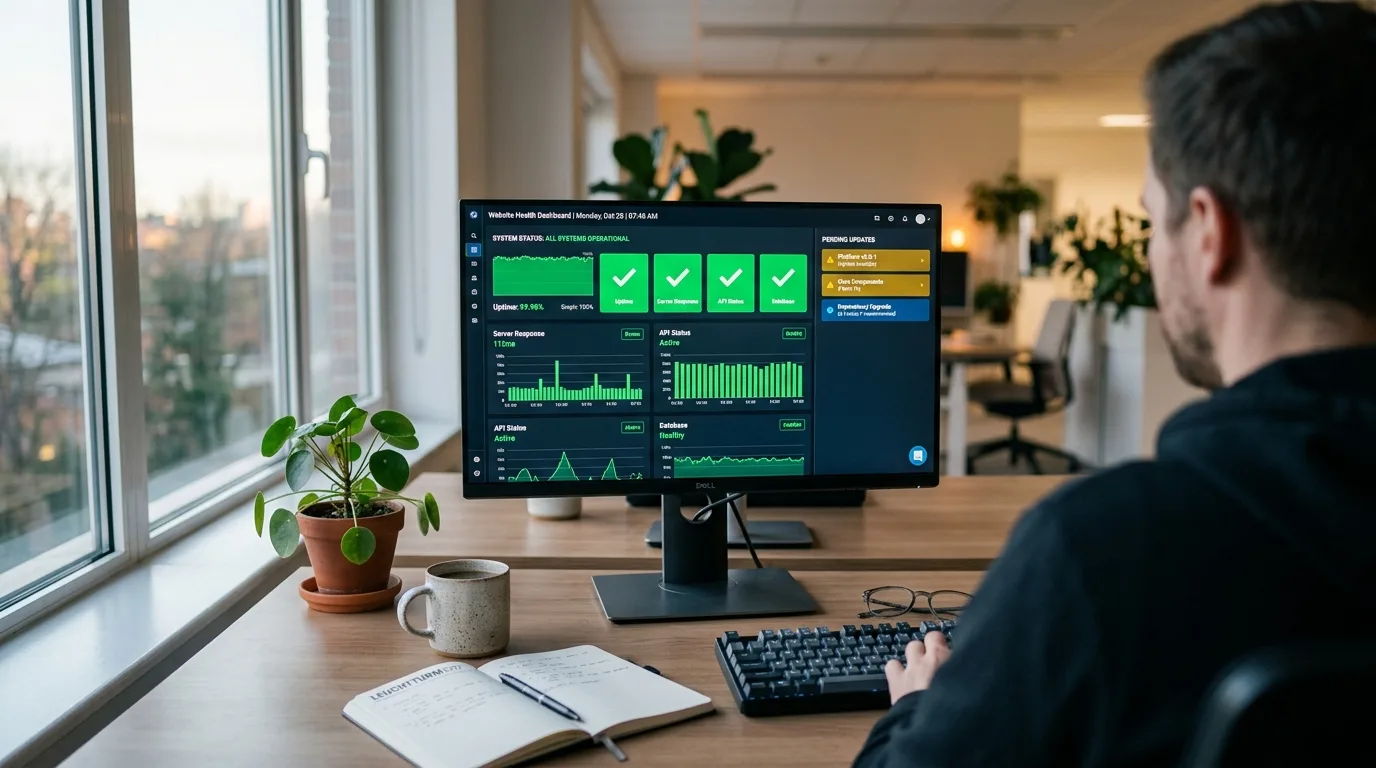
- Lucid Media’s Sitecare and hosting plans carry a 99.9% uptime SLA on hosting, with tested updates, daily backups and support from the same team that can also fix the underlying marketing problem if your site stops performing.
If your website is already live and doing its job, the question isn’t who should build you a new one. It’s who’s going to keep it online, secure, backed up and up to date without you having to think about it. That’s a different buying decision to hiring a web design agency, and it deserves a different shortlist.
We looked at the companies NZ businesses actually hire for ongoing website maintenance and management, not new builds or redesigns, and compared them on what matters for this job: what’s actually included in the plan, how updates are handled, backup and security practices, response times when something breaks, and whether the pricing is transparent enough to compare properly.
Short on time? For established NZ SMBs who want their site cared for by the same team that understands what drives leads and revenue from it, we rate Lucid Media’s Sitecare and hosting as our top pick. Get in touch and we’ll tell you honestly whether your current host and maintenance setup is good enough or not.
5 Best Website Maintenance & Management Companies for NZ Businesses:
Website maintenance sits in a strange spot for a lot of business owners. It’s not exciting, it’s easy to put off, and most people only think about it properly after something has already gone wrong: a hacked WordPress install, a lapsed SSL certificate, a plugin update that broke the checkout, or a host that quietly stopped responding to support tickets. Below is a fair look at five companies operating in this space in New Zealand, what they actually offer, and where each one tends to be the right fit.
1. Lucid Media - Sitecare and hosting built around performance, not just uptime
Lucid Media’s Sitecare and hosting plans are built for a specific kind of client: an established NZ business whose website already matters commercially, and who wants it looked after by people who understand what the site is actually meant to do, not just whether the server is switched on.
The plans include managed WordPress hosting on premium cloud infrastructure, daily backups with 30-day retention, 24/7 security monitoring and firewall protection, and WordPress core, plugin and theme updates that are tested on a staging environment before they touch the live site. That staging step matters more than it sounds. A huge share of “the site’s broken” emergencies start with an update applied directly to a live site with no safety net. Uptime is monitored every 60 seconds, and Lucid Media’s hosting plans carry a 99.9% uptime SLA, a formal commitment on the hosting itself, not a vague promise about the whole website.
Higher-tier Professional and Enterprise plans add a CDN for faster global delivery, staging environments as standard, and a set number of development hours included each month, so small content changes, bug fixes or minor feature tweaks are covered under the plan instead of triggering a one-off invoice every time you need something updated. Plans are month-to-month with no lock-in contract, which puts the pressure on the service to earn the renewal rather than on fine print to force it.
What separates Lucid Media from a pure hosting or maintenance shop is that the same company also does the marketing side: SEO, conversion rate optimisation, and paid ads. If your uptime monitoring flags a problem, or a Core Web Vitals score starts slipping, it’s the same team that can diagnose whether that’s a hosting issue or a bigger performance and conversion problem, rather than a maintenance provider who can only tell you “the server’s fine” and leave you to find someone else to explain why leads dropped off. That combination is backed by results the agency has produced for clients across NZ and Australia: 100+ projects delivered since 2018, over $1M in revenue generated for clients from the leads and sales those projects produced, and 65+ five-star Google reviews.
Lucid Media doesn’t publish a public rate card for Sitecare plans; pricing is set out clearly on the Sitecare and hosting page with tiered plans, and a short call will confirm which tier fits your site’s size and traffic. For a business that already relies on its website for leads or sales, that’s a more useful way to buy maintenance than picking the cheapest monthly number and hoping the fine print doesn’t bite later.
Not sure if your current host or maintenance plan is actually doing its job? Get in touch and we’ll take an honest look at what you’ve got, tell you if it’s fine, and only recommend a change if there’s a real gap.
2. Website Maintenance Services NZ - Long-standing specialist in WordPress care
Website Maintenance Services NZ is one of the more established names in this specific corner of the market, having operated in NZ website maintenance for a long time. That kind of longevity is worth noting in an industry where a lot of “maintenance” providers are really web design agencies that added a support plan as an afterthought.
Their positioning is straightforward: plans start from an accessible entry price, aimed squarely at small business owners who want their WordPress site kept updated, backed up and secure without having to manage it themselves or learn the technical side. For a business with a simple brochure site or a small WooCommerce store that just needs to keep running reliably, that entry price point makes ongoing care an easy yes rather than a cost to defer.
Because the company has focused on maintenance specifically rather than treating it as a bolt-on to design work, they’ve likely seen a wide range of the ways WordPress sites break, from abandoned plugins to server misconfigurations to the slow performance creep that happens when nobody’s watching. For business owners whose main requirement is “just keep it running and don’t let me get hacked,” a specialist with this much focus on the maintenance side specifically is a sensible, low-risk option.
Where it may fall short of some businesses’ needs is if you’re looking for a maintenance provider that also actively contributes to growth, monitors conversion performance, or ties technical health back to marketing outcomes. That’s a reasonable trade-off for a lower price point and a narrower scope, and it’s worth being clear-eyed about which of those two things (pure technical upkeep, versus upkeep plus commercial oversight) is actually what you need.
3. Boost Social - WordPress plans with development hours built in
Boost Social offers WordPress maintenance plans from a competitive entry price, with development hours included as part of the plan rather than charged separately. That structure appeals to businesses who know their site will need small, ongoing changes (updated pricing, a new team photo, a seasonal banner, a copy tweak) and want those covered without a fresh quote every time.
As a company with a broader social media and digital marketing background, Boost Social’s maintenance offering sits alongside other services rather than standing entirely alone. That can be a genuine advantage for businesses already using them, or considering using them, for social media management, since it keeps the number of vendors down and gives one point of contact across more of the digital side of the business.
The inclusion of dev hours in an entry-level plan is a useful signal of value. A lot of maintenance plans at a similar price point only cover the passive stuff (backups, updates, monitoring) and treat any actual change request as billable work on top. Having hours baked in from a lower starting price is a genuinely useful difference for businesses that expect to need small changes regularly rather than rarely.
As with any plan advertised from a low monthly figure, it’s worth checking exactly how many hours are included and what happens once they’re used up in a given month, since that’s usually where plans differentiate once you’re actually a customer rather than reading the pricing page.
4. Web Digital Auckland - Managed WordPress support for Auckland businesses
Web Digital Auckland offers managed WordPress support aimed at Auckland-based businesses, covering the core maintenance tasks: updates, security and general site upkeep for WordPress websites. Being Auckland-based and Auckland-focused, they’re a natural fit for business owners who value being able to reach a local team directly rather than working through a call centre or an offshore support queue.
Managed WordPress support of this kind typically covers keeping the CMS, theme and plugins current, watching for security issues, and being available when something needs attention. For a business that already has a website they’re happy with and just wants a dependable local option to keep it running smoothly, that’s exactly the service being asked for, nothing more elaborate required.
The tighter, more locally-focused positioning means the offering is likely to suit businesses with fairly standard WordPress setups rather than more complex custom builds or e-commerce platforms with heavier support demands. As always, it’s worth confirming directly what’s included in terms of backup frequency, update testing process, and response times before committing, since these details vary more between providers than the top-line “WordPress support” label suggests.
5. ClickFusion - Hosting and maintenance bundled together
ClickFusion bundles hosting and maintenance into a single offering, which suits businesses who’d rather deal with one provider for both rather than splitting hosting with one company and maintenance with another. That split is a common source of finger-pointing when something breaks (is it a hosting issue or a maintenance issue?), so having both under one roof removes an entire category of “that’s not our department” conversations.
A combined hosting-and-maintenance model generally means the provider has more direct control over server-level performance and security, since they’re not relying on a separate hosting company to make changes or respond to an incident. That can translate into faster fixes when there’s a genuine hosting-level problem, because there’s no handoff between two different companies to coordinate.
As with any bundled offering, the value depends on how good each half of the bundle actually is on its own. It’s worth asking specifically about backup frequency and retention, whether updates are tested before going live, and what the response time looks like if the site goes down outside business hours, the same questions worth asking any maintenance provider regardless of whether hosting is bundled in.
What good website maintenance actually includes
Good website maintenance covers five things at minimum: managed hosting, security monitoring, tested updates, regular backups, and human support when something goes wrong. Providers that only do one or two of these and call it “maintenance” are leaving real gaps.
Managed hosting. This is more than just “your site is on a server somewhere.” Managed hosting means the server environment is configured and monitored specifically for the platform you’re running (usually WordPress), with performance tuning, caching, and resource allocation set up properly rather than left on defaults.
Security monitoring and a firewall. WordPress sites are a constant target simply because of how widely the platform is used. A proper maintenance plan includes active monitoring for suspicious activity and a firewall that blocks known attack patterns before they reach your site, not just a scan that runs once a week after the fact.
Updates that are tested, not just applied. WordPress core, plugin and theme updates need to happen regularly for security reasons, but applying them blind to a live site is how a lot of “the site’s down” emergencies start. The better providers test updates on a staging copy first and only push them live once nothing’s broken.
Backups with real retention. A backup taken once a month isn’t much use if something goes wrong three weeks after the last one ran. Look for daily backups with at least 30 days of retention, and ask how a restore actually works in practice, not just whether backups exist.
Support from an actual person. When your site goes down, you want a phone number or a direct line to someone who can act, not a ticket that sits in a queue for 48 hours. Ask any provider what their response time looks like for a genuinely urgent issue, and get a specific answer, not “as soon as possible.”
How much does website maintenance cost in NZ?
Website maintenance plans in NZ generally range from an affordable monthly rate for basic care (hosting, updates, backups and security monitoring) up to a few hundred dollars a month for plans that bundle in development hours for ongoing changes.
At the lower end, you’re typically paying for the passive protective work: keeping the site backed up, updated and secure. That’s the right tier for a simple brochure site that rarely needs content changes. As plans move up in price, the difference is usually development hours included for actual changes to the site (new pages, content updates, small feature additions), faster support response times, and sometimes added infrastructure like a CDN or staging environments as standard.
It’s worth being sceptical of maintenance plans priced well below the market simply doing the bare minimum: an automated backup script and nothing else. Ask specifically what’s covered in the plan you’re comparing before assuming a lower number is the better deal.
What happens if you skip website maintenance
Skipping maintenance doesn’t usually cause an immediate problem. It causes a slow accumulation of risk that eventually turns into an expensive one. WordPress in particular relies on regular updates to core software, themes and plugins to stay secure; every version behind is a version with known vulnerabilities that automated bots are actively scanning for.
The most common failure pattern looks like this: a site runs fine for a year or two with no updates because nothing visibly breaks, then either a plugin conflict causes the site to go down with no recent backup to restore from, or the site gets compromised and starts silently redirecting visitors or serving malware, sometimes for weeks before anyone notices. At that point you’re not paying a maintenance fee anymore, you’re paying an emergency developer rate to clean up an active problem, and depending on how long it went unnoticed, you may also be dealing with a Google Safe Browsing warning that scares off legitimate visitors until it clears.
None of that is certain to happen to every unmaintained site, and plenty of sites limp along fine for a while without proper care. But the cost asymmetry is the point: a modest monthly maintenance fee is cheap insurance against a problem that, if it does hit, tends to cost a lot more than the years of maintenance fees that would have prevented it.
Website maintenance vs website design: what’s the difference
Website design is the one-off work of building or redesigning a site. Website maintenance is the ongoing work of keeping an existing site running, secure and up to date after it’s live. They’re related services but they solve different problems, and hiring the wrong one for your situation wastes money either way.
If your site is outdated, doesn’t reflect your business properly, or isn’t generating leads the way it should, that’s a design and strategy problem, and you need an agency that specialises in web design and conversion-focused rebuilds. If your site is doing its job but you’re worried about security, uptime, or just don’t want to be the one remembering to click “update” on WordPress plugins, that’s a maintenance problem, and paying a design agency’s day rate to handle it is usually overkill.
Some agencies, Lucid Media included, offer both, which has a practical benefit: if your maintenance provider notices your bounce rate creeping up or your Core Web Vitals scores slipping, they can flag it and, if you want, move straight into fixing the underlying design or performance issue rather than you having to find and brief a second agency from scratch.
How to choose a website maintenance company
Get specific about what’s included. “We handle your maintenance” can mean anything from a weekly automated backup to full managed hosting with tested updates and a direct support line. Ask for the exact list: hosting type, backup frequency and retention, update process, security monitoring, and support response time.
Check how updates are tested. Providers that push WordPress updates straight to your live site are taking a risk with your site on your behalf. A staging environment that tests updates before they go live is a meaningfully safer process, and it’s worth asking directly whether this is standard practice or an extra.
Understand backup retention, not just backup existence. Almost every provider will say “yes we do backups.” The real question is how often, how long they’re kept, and how quickly a restore can actually happen if you need one.
Ask about response times in writing. “Fast” and “priority” aren’t answers. Ask what the actual response time commitment is for an urgent issue like a site being down, and get it in writing if it matters to your business.
Consider whether you need more than maintenance. If your website already needs work beyond keeping it running, whether that’s SEO, conversion improvements, or a redesign, it’s worth considering a provider who can do both maintenance and that growth work, so problems get flagged and fixed by people who understand the whole picture rather than getting lost between two separate vendors.
Check contract terms. Month-to-month plans with no lock-in put the pressure on the provider to keep earning your business every month. Long contracts with cancellation penalties are worth extra scrutiny, since they remove some of that incentive.
Conclusion: choosing the right website maintenance company for your NZ business in 2026
Website maintenance is one of those business costs that’s easy to underrate until the month you really need it. The companies covered here all operate in the same broad space, keeping NZ business websites online, secure and up to date, but they differ in scope, pricing structure and how closely maintenance connects to the rest of your website’s performance.
Website Maintenance Services NZ brings long-standing specialist focus at an accessible entry price. Boost Social bundles development hours into its WordPress plans from a competitive starting point. Web Digital Auckland offers a local, Auckland-focused managed WordPress option. ClickFusion combines hosting and maintenance under one roof to remove the handoff between two providers. Each is a reasonable choice depending on your budget and how simple your needs are.
For established NZ businesses whose website is a genuine part of how they generate leads and revenue, Lucid Media’s Sitecare and hosting plans are our top pick. A 99.9% uptime SLA on hosting, tested updates, daily backups and real support are the baseline; what makes it different is that the same team can also tell you if a problem is a hosting issue or a bigger performance and conversion issue, and do something about either one.
If you’re not sure whether your current setup is good enough, that’s worth finding out before something forces the question.
Get in touch with Lucid Media and we’ll take an honest look at your current hosting and maintenance setup, tell you straight if it’s fine as is, and only recommend a change if there’s a real gap worth closing.
Frequently asked questions
What does website maintenance actually include?
Good website maintenance includes managed hosting, security monitoring and a firewall, WordPress core/plugin/theme updates that are tested before going live, regular backups with a meaningful retention period (30 days is a reasonable baseline), and support from a real person when something breaks. Lucid Media’s Sitecare plans cover all of this, with higher tiers adding a CDN, staging environments, and monthly development hours for small site changes.
How much does website maintenance cost in New Zealand?
Website maintenance in NZ typically starts from an affordable monthly rate for basic care covering hosting, updates, backups and security. Plans that include development hours for ongoing changes generally cost more, often ranging into a few hundred dollars a month depending on how many hours are included and what else is bundled in, such as a CDN or priority support.
Do I need website maintenance if my site rarely changes?
Yes. Maintenance isn’t only about making changes to your site, it’s about keeping the underlying software secure and functional. Even a site that never changes visually still runs on a CMS, theme and plugins that need regular security updates. Skipping maintenance because “nothing’s changing” is one of the more common ways sites end up hacked or broken.
What’s the difference between website maintenance and website design?
Website design is the one-off project of building or redesigning a site. Website maintenance is the ongoing service of keeping an existing site running securely after launch, covering hosting, updates, backups and support. If your site needs a redesign or isn’t generating leads, that’s a web design problem. If your site is fine but needs to be kept secure and online, that’s a maintenance problem.
How often should a WordPress site be backed up?
Daily backups are the standard for an active business website, with at least 30 days of retention so you have a recent, clean version to restore from if something goes wrong. Sites that update content frequently, such as e-commerce stores taking regular orders, benefit from even more frequent backups so a restore doesn’t lose recent transactions or content.
What happens if my website gets hacked?
A hacked website needs to be isolated quickly to stop it affecting visitors, cleaned of the malicious code, and restored from a clean backup if the damage is extensive, followed by a review of how the breach happened so it doesn’t repeat. This is far faster and cheaper with an existing maintenance provider who already has clean backups and knows your site, compared to trying to find and brief an emergency developer with no prior knowledge of your setup after the fact.
Disclosure: Lucid Media published this article and is one of the companies featured. The rankings reflect our own opinion, not an independent audit, and we’ve aimed to describe every company fairly.

Written by
Jason Poonia
Jason Poonia is the founder and Managing Director of Lucid Media, helping NZ businesses grow online since 2018. With over 7 years delivering results for clients across New Zealand and internationally, Jason combines technical expertise with proven marketing strategies to help businesses attract more customers and build scalable systems. Background in Computer Science from the University of Auckland.