
What's Trending in Web Design in 2026?
Web design is evolving fast. Here are the real trends shaping how NZ businesses should be building and thinking about their websites right now.
Key Takeaways
- Web design in 2026 is defined by performance, accessibility, and intentional simplicity
- AI-powered personalisation is moving from enterprise to mainstream for NZ businesses
- Minimalism has matured: clean, bold, and type-forward designs are replacing visual noise
- Accessibility-first design is becoming a standard, not an afterthought
- Motion and micro-animations are being used strategically, not decoratively
- The bar for what “good” looks like has risen significantly, making professional design more important than ever
Web design trends in 2026 aren’t about novelty. The most significant shifts are about performance, clarity, and relevance. Businesses that understand where design is heading can use it as a competitive advantage. Those that don’t risk websites that feel increasingly dated.
Here’s what’s actually shaping web design right now, and why it matters for NZ businesses.
1. Minimalism With Character
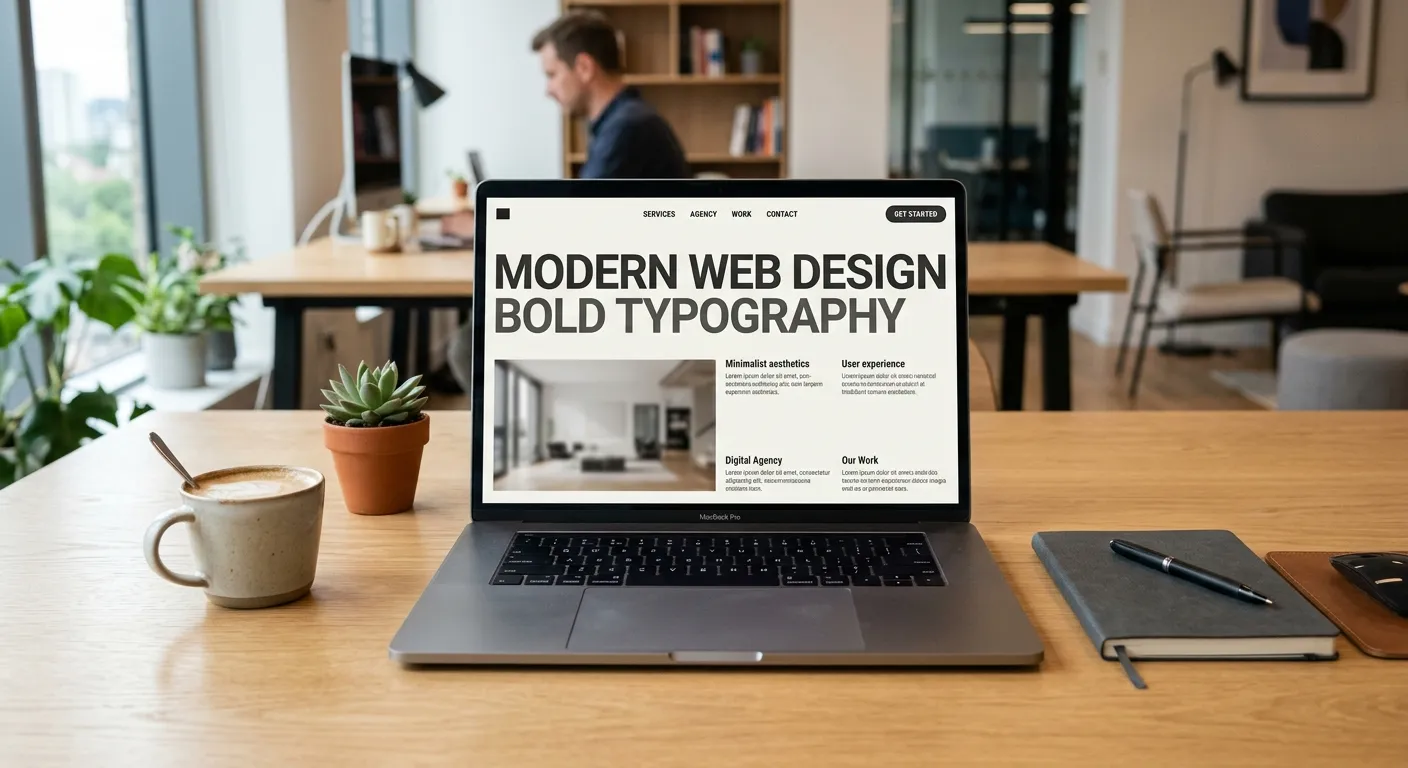
The overcrowded, feature-heavy websites of the early 2020s are giving way to cleaner, more intentional design. But this isn’t the cold minimalism of a decade ago. The trend is towards minimal but warm: lots of whitespace, strong typography, restrained colour palettes, and high-quality imagery that does real emotional work.
The best websites in 2026 feel premium without feeling austere. They’re easy to navigate, fast to load, and immediately clear in their purpose. Less is more, but the “less” has to be carefully chosen.
2. Bold Typography as a Design Element
Type is no longer just for reading. In 2026, typography is being used as a primary visual element: large, expressive headlines that set mood and personality before the visitor reads a single word.
Custom typefaces, oversized display text, and strong typographic hierarchy are replacing image-heavy hero sections in many categories. For businesses in competitive markets, a distinctive typographic voice is becoming a meaningful brand differentiator.
3. Performance-First Design
Page speed and core web vitals are no longer a technical checkbox. They’re a core design consideration from the first stage of a project. Google’s continued emphasis on performance as a ranking signal, combined with visitor expectations shaped by fast-loading apps, has made speed a non-negotiable.
In practice, this means designers and developers are working more collaboratively than ever, optimising images at the design stage, choosing lightweight frameworks, and building performance into the architecture rather than trying to retrofit it.
4. AI-Powered Personalisation
Personalisation is moving down-market. What was once available only to enterprise businesses with large budgets is increasingly accessible to NZ SMBs. AI tools can now tailor website content, imagery, and calls to action based on visitor behaviour, location, device, and referral source.
The practical impact: websites that show different content to a visitor from Auckland vs. one from Christchurch, or that adapt their message based on whether a visitor came from a social ad or a Google search. This level of relevance improves conversion rates meaningfully.
5. Accessibility as a Standard
Web accessibility, designing so that people with disabilities can use your website effectively, has shifted from a legal compliance issue to a design standard. In 2026, the best web designers build with accessibility baked in from the start: proper colour contrast, keyboard navigation, screen reader compatibility, and alternative text for images.
Beyond the ethical case, accessible websites tend to perform better in search and convert better broadly. The effort required to build accessibly is minimal when it’s part of the process from the beginning.
6. Micro-Animations Used With Purpose
Subtle animations that respond to user interaction, a button that changes state on hover, a section that fades in as you scroll, a loading indicator that’s actually pleasant to watch. These micro-animations have become a standard part of quality web design.
The key word is subtle. The trend has moved away from animations that distract or delay toward animations that guide, confirm, and delight without adding friction. When used well, they make a website feel alive. When overused, they slow everything down and frustrate users.
7. Dark Mode Support
Offering a dark mode version of a website has moved from a premium feature to an expectation for many audiences. With operating systems defaulting to dark mode and users actively preferring it in certain contexts, websites that only offer a light mode are missing a segment of their audience.
Implementing dark mode well requires more than just inverting colours. It means thoughtful adaptation of imagery, colour palettes, and contrast ratios across both modes.
8. Honest, Human Content
The visual trend towards minimalism is matched by a content trend towards authenticity. Generic corporate copy, stock-photo smiles, and mission statements nobody reads are being replaced by direct, specific, human communication. Real faces, real stories, real results.
Visitors in 2026 are more sophisticated and more sceptical than ever. The websites that convert are the ones that feel real.
Staying ahead of web design trends isn’t about chasing every new idea. It’s about knowing which shifts matter for your business and implementing them intentionally. Book a free discovery call with Lucid Media and let’s talk about what your website needs in 2026.
Related Posts
Written by
Jason Poonia
Jason Poonia is the founder and Managing Director of Lucid Media, helping NZ businesses grow online since 2018. With over 6 years delivering results for clients across New Zealand and internationally, Jason combines technical expertise with proven marketing strategies to help businesses attract more customers and build scalable systems. Background in Computer Science from the University of Auckland.