AI and the Future of SEO: What NZ Businesses Need to Know in 2026
AI is reshaping SEO in 2026. Learn how Google AI Overviews, ChatGPT search, and algorithm changes affect NZ businesses and what to do about it.
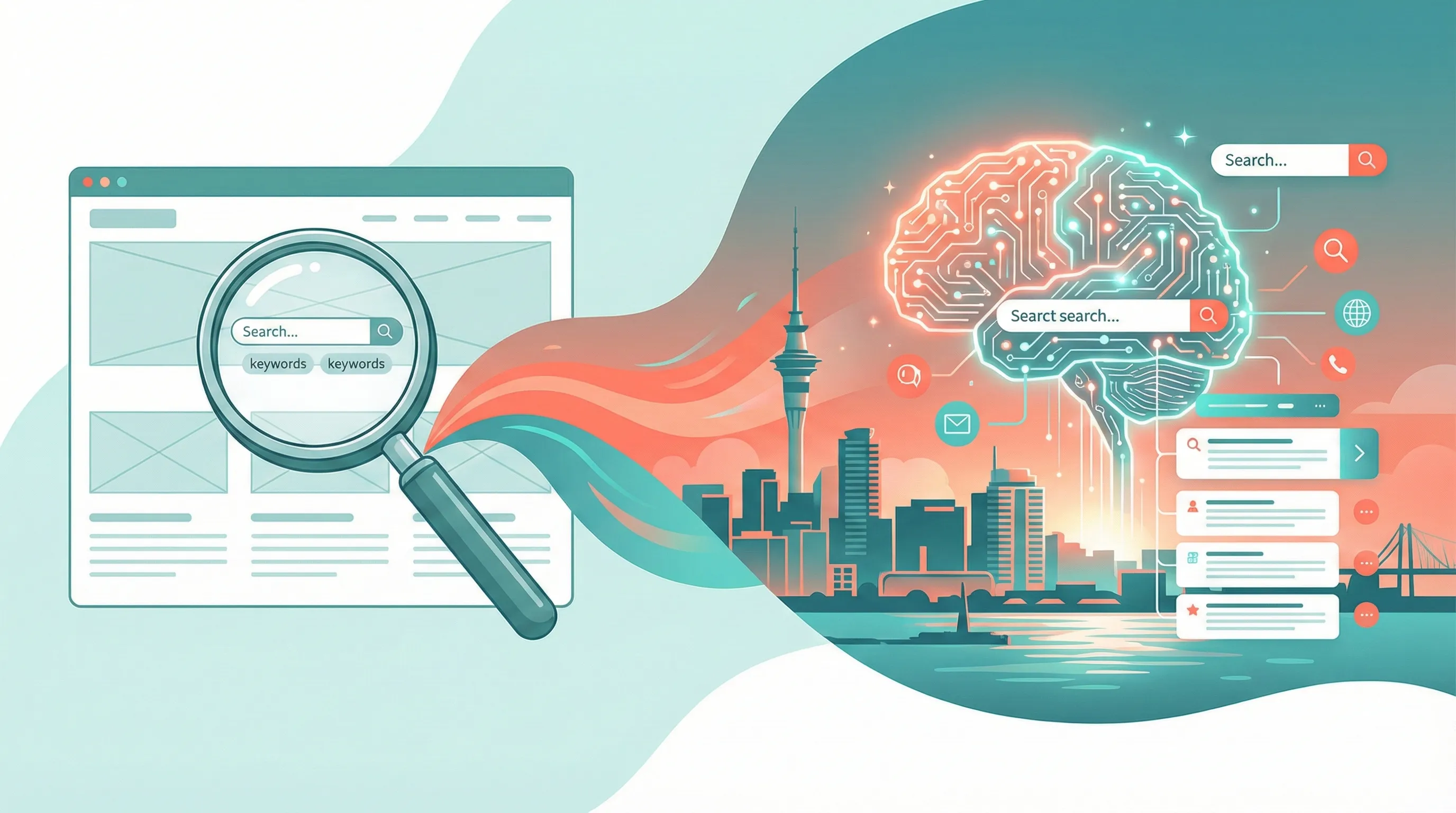
SEO in 2026 looks nothing like it did five years ago. Google’s AI now generates answers directly in search results. ChatGPT has its own search function. Algorithms understand context and intent better than ever.
If you’re still doing SEO the way you did in 2020, you’re falling behind. Here’s what’s actually changed and what NZ businesses need to do about it.
How AI Has Changed Search
Google’s AI Overviews
Google now shows AI-generated summaries at the top of many search results. These pull information from multiple websites and synthesise answers directly in the search interface.
For some queries, users get what they need without clicking anything. For others, they click through to sources cited in the overview.
This changes the game. Ranking in the traditional blue links still matters, but now you also want to be the source Google’s AI quotes.
ChatGPT and Perplexity as Search Engines
People are increasingly using AI assistants instead of Google for certain queries. ChatGPT’s search function browses the web in real-time. Perplexity cites sources prominently.
Your content now needs to be findable and useful to these systems, not just Google.
Better Understanding of Intent
Google’s algorithms (including BERT and MUM) now understand the meaning behind searches, not just the keywords. They can interpret context, handle complex queries, and match content to intent more accurately.
This means keyword stuffing is completely dead. Writing naturally for humans is more important than ever.
What Still Matters (The Fundamentals)
Despite all the AI changes, core SEO principles haven’t disappeared:
Quality content remains essential. AI systems are trying to find the best, most accurate information. If your content is thin or low-quality, no amount of optimisation helps.
Backlinks still signal authority. When reputable sites link to you, both Google and AI systems interpret that as a trust signal.
Technical foundations are table stakes. Fast loading, mobile-friendly, secure (HTTPS), crawlable. These aren’t competitive advantages anymore; they’re minimum requirements.
User experience affects rankings. If people immediately bounce from your site, that signals a problem.
What’s Changed (The New Requirements)
E-E-A-T Matters More Than Ever
Experience, Expertise, Authoritativeness, and Trustworthiness. Google has always cared about this, but AI makes it more important.
AI systems are trying to identify reliable sources. They look for:
- Clear author information and credentials
- Demonstrated expertise in the topic
- Consistent, accurate information
- Signals of real business legitimacy
Anonymous content with no clear source gets deprioritised. Content from recognised experts gets featured.
Structure and Clarity for AI Extraction
AI systems extract information better from well-structured content. This means:
- Clear headings that describe what follows
- Direct answers in the first paragraph of sections
- Logical organisation
- Specific facts rather than vague statements
Content that rambles or buries information doesn’t get cited.
Topical Authority Over Individual Keywords
Google now evaluates your expertise across a topic, not just individual pages. Having one good page about web design means less than having comprehensive coverage of web design topics across your site.
This favours businesses that go deep on their actual expertise rather than targeting random keywords.
Entity-Based Understanding
Search engines now think in terms of entities (people, places, businesses, concepts) and relationships between them. Your business is an entity. Your services are entities. The places you serve are entities.
Schema markup helps search engines understand these entities. Consistent information across the web reinforces them.
Practical Changes for NZ Businesses
Restructure Content for AI
Audit your key pages. For each one:
- Does the main answer appear in the first paragraph?
- Are headings descriptive and useful?
- Is the content comprehensive enough to be authoritative?
- Are facts specific rather than vague?
Restructure pages that don’t meet these criteria.
Build Topical Depth
Identify your core expertise areas. Do you have comprehensive content coverage? If you’re an Auckland accountant, you should have content covering:
- Each service you offer
- Common questions clients ask
- Industry-specific considerations
- Local/NZ-specific information
Gaps in coverage signal to AI that you’re not a complete authority.
Implement Schema Markup
At minimum, implement:
- LocalBusiness schema (who and where you are)
- Service schema (what you offer)
- FAQPage schema (for FAQ sections)
- Article schema (for blog posts)
This helps AI understand your content’s purpose and context.
Demonstrate Expertise Visibly
- Add author bios with real credentials
- Include your business registration and certifications
- Show real case studies with specific results
- Display genuine reviews and testimonials
Make it obvious that your content comes from qualified sources.
Answer Questions Directly
Identify questions your customers ask. Create content that answers them directly and comprehensively.
“How much does a website cost in NZ?” deserves a direct answer with specific price ranges, not three paragraphs of preamble about the importance of websites.
Monitor AI Results
Start tracking where your content appears in AI-generated results:
- Search your key terms in Google and note AI Overview results
- Try the same queries in ChatGPT and Perplexity
- Note which competitors are being cited
- Identify gaps in your coverage
Will AI Replace SEO?
No. But it changes what SEO means.
SEO used to be primarily about ranking in a list of blue links. Now it’s about being the trusted source that AI systems quote and cite.
The businesses that will win are those creating genuinely useful, authoritative content that both humans and AI can understand and trust.
The tactics have evolved. The goal remains the same: being found by people who need what you offer.
What This Means for Your Strategy
If you haven’t updated your SEO approach for AI, start now:
- Audit your content for AI-readiness (structure, clarity, depth)
- Implement schema markup across your site
- Build topical authority in your core areas
- Demonstrate expertise visibly
- Monitor your visibility in AI results
The businesses adapting now will have significant advantages over those who wait.
Need help updating your SEO strategy for the AI era? Get in touch and we’ll assess where you stand and what needs to change.

Written by
Jason Poonia
Jason Poonia is the founder and Managing Director of Lucid Media, helping NZ businesses grow online since 2018. With over 7 years delivering results for clients across New Zealand and internationally, Jason combines technical expertise with proven marketing strategies to help businesses attract more customers and build scalable systems. Background in Computer Science from the University of Auckland.