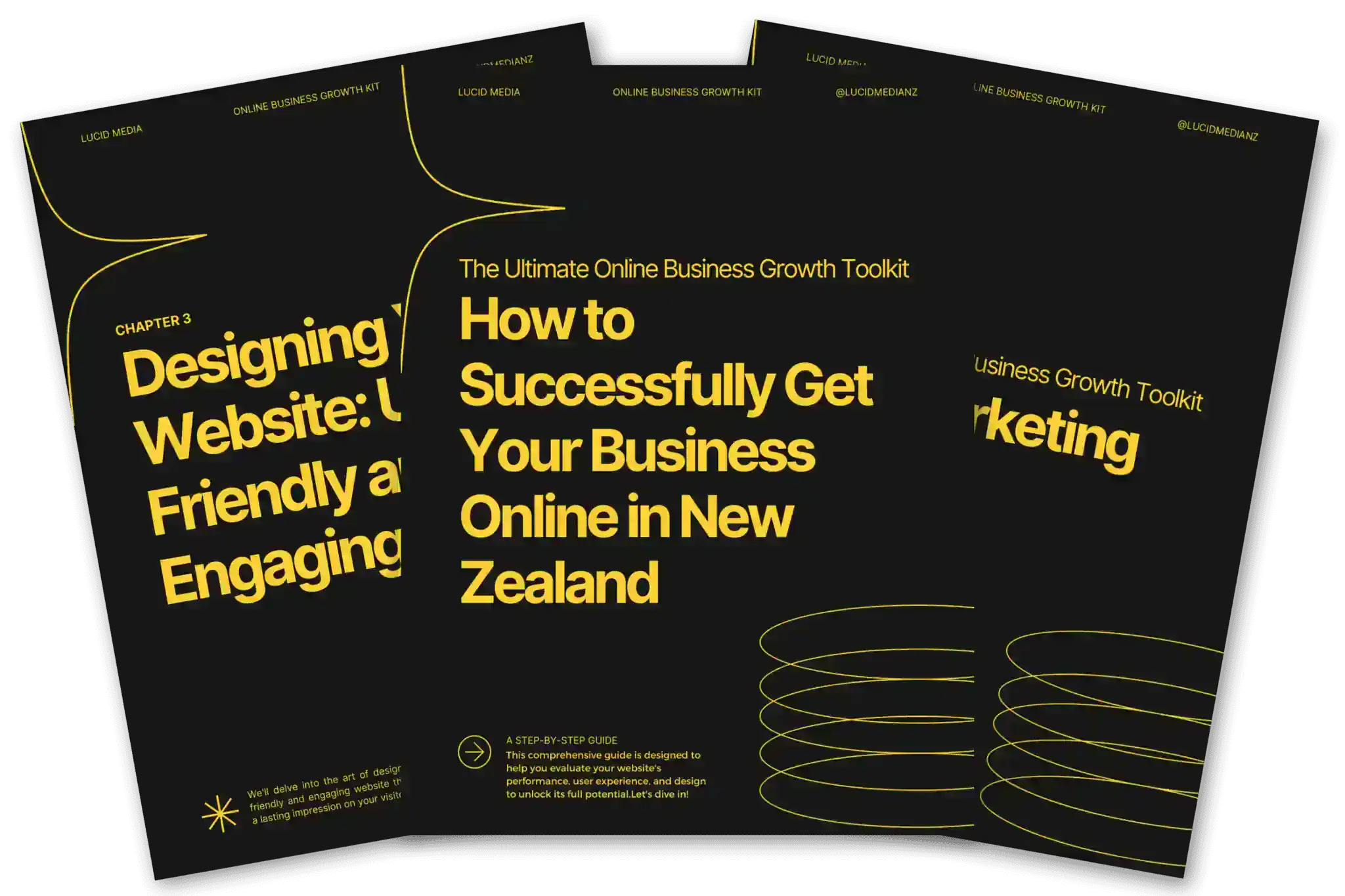
How to Use ChatGPT for Marketing: A Practical Guide for NZ Businesses
Learn how to use ChatGPT for marketing your NZ business. Practical prompts for content creation, ad copy, brainstorming, and tips to avoid common AI pitfalls.

Key Takeaways
- ChatGPT is most effective for generating ideas, creating first drafts, brainstorming content angles, and writing ad copy variations, not for producing final publishable content.
- Specific, context-rich prompts that include your industry, audience, tone, format, and length constraints produce dramatically better results than vague requests.
- Raw ChatGPT output should never be published directly, as it has recognisable patterns and frequently fabricates statistics, quotes, and facts that require verification.
- ChatGPT defaults to US context, so NZ businesses must manually localise terminology, regulations, and cultural references in all generated content.
- Avoid inputting sensitive business information or client data into ChatGPT, as inputs could theoretically be used for model training.
- Alternatives like Claude (better for long-form writing), Gemini (Google integration), and Jasper (marketing-specific templates) may suit different use cases.
ChatGPT has become a genuine business tool. Not just a novelty, but something that can save hours every week if you use it right.
The catch: most people use it wrong. They ask vague questions and get generic answers. Or they copy AI output directly without editing, and it shows.
Here’s how NZ businesses can actually use ChatGPT for marketing, with specific prompts that work.
What ChatGPT Is Good At
ChatGPT excels at:
- Generating ideas quickly
- Creating first drafts and variations
- Summarising and restructuring information
- Brainstorming angles you hadn’t considered
- Adapting content for different formats
- Writing within constraints (character limits, specific structures)
It’s essentially a very fast writing assistant that never gets tired.
What ChatGPT Is Bad At
ChatGPT struggles with:
- Current information (training data has cutoffs)
- Accuracy (it confidently makes things up)
- Genuine expertise and original insights
- Your specific brand voice (without extensive training)
- NZ-specific context and local knowledge
- Anything requiring real-world verification
Understanding these limitations shapes how you should use it.
Practical Marketing Uses
Social Media Content
Generating social post ideas and variations is one of the best uses. Instead of staring at a blank content calendar, use ChatGPT to generate options.
Prompt example:
“I run a plumbing business in Auckland. Generate 10 Facebook post ideas that would be relevant to homeowners. Include a mix of educational tips, seasonal reminders, and engagement questions. Keep each under 100 words.”
Then: Pick the best ideas, rewrite in your voice, add your specific expertise, and fact-check any claims.
Email Marketing
ChatGPT can draft email sequences, subject line variations, and campaign structures.
Prompt example:
“Write 3 subject line variations for an email announcing our end of financial year accounting services offer to small business owners in NZ. The email promotes a 20% discount on tax preparation. Keep subject lines under 50 characters.”
Then: Test the variations against your own ideas. See what resonates with your actual audience.
Blog Post Outlines
Rather than asking ChatGPT to write entire posts, use it for structure and research.
Prompt example:
“I want to write a blog post about ‘how to choose a website designer in Auckland.’ Create an outline with main sections and 3-4 points to cover under each section. Focus on practical advice for small business owners.”
Then: Use the outline as a starting point. Write the actual content yourself with your expertise.
Product Descriptions
For e-commerce, ChatGPT can generate description variations quickly.
Prompt example:
“Write a 50-word product description for a merino wool beanie. Target audience is outdoor enthusiasts in NZ. Emphasise warmth, natural materials, and NZ-made quality. Include a call to action.”
Then: Verify any claims, adjust to your brand voice, ensure accuracy.
Ad Copy Variations
Testing multiple ad versions is essential. ChatGPT speeds up variant creation.
Prompt example:
“Write 5 Google Ads headlines (max 30 characters each) for a Wellington commercial cleaning company. Focus on different benefits: reliability, eco-friendly products, after-hours service, local business, and free quotes.”
Then: Use these as starting points. Test against your proven performers.
Customer Service Templates
Draft responses to common enquiries that your team can personalise.
Prompt example:
“Write a template response to a customer asking about our turnaround time for website projects. Be friendly but professional. Explain that timelines vary based on project scope, give a typical range of 6-10 weeks for standard sites, and offer a discovery call to discuss their specific needs.”
Then: Customise to match your actual processes and voice.
Better Prompts Get Better Results
Be Specific About Context
Bad: “Write social media posts for my business”
Good: “Write 5 Instagram captions for a NZ skincare brand targeting women 25-45. Our brand voice is friendly and educational. Posts are promoting a new sunscreen launch. Include relevant hashtag suggestions.”
Specify Format and Length
Bad: “Write an email”
Good: “Write a 150-word email to past customers announcing our summer sale. Subject line should create urgency. Include clear CTA button text. Tone should be warm but not pushy.”
Give Examples When Possible
Bad: “Write in our brand voice”
Good: “Write in this style: [paste example of your actual content]. Match the tone and sentence structure.”
Ask for Variations
Bad: “Write a headline”
Good: “Write 5 headline variations for this landing page. Vary the approach: one focusing on benefit, one on problem solved, one with a number, one with a question, one creating urgency.”
What Not to Do
Don’t Publish Unedited AI Content
Raw ChatGPT output is recognisable. It has patterns, certain phrases it overuses, a particular cadence. People can tell, and Google can tell.
Always rewrite substantially. Add your voice, your expertise, your examples.
Don’t Trust Facts Without Verification
ChatGPT makes things up confidently. Statistics, dates, quotes, company information. Verify everything before publishing.
Don’t Use It for Expert Content
If your value comes from expertise, generic AI content undermines that. Your thought leadership should come from actual thoughts.
Don’t Ignore NZ Context
ChatGPT defaults to US context. Terminology, regulations, cultural references. Always localise for NZ audiences.
Don’t Share Confidential Information
Anything you put into ChatGPT could theoretically be used for training. Don’t input sensitive business information, client data, or confidential details.
Alternatives Worth Knowing
Claude: Better for longer content and nuanced writing. More conversational.
Gemini: Integrates with Google services. Good for research tasks.
Jasper: Marketing-specific features. Good templates but paid.
Copy.ai: Focused on marketing copy. Template-driven approach.
Experiment to find what works for your specific needs.
Getting Started
If you’re new to using ChatGPT for marketing:
- Start with brainstorming tasks (post ideas, headline variations)
- Use it for first drafts, not final content
- Always rewrite in your voice
- Verify any facts or claims
- Track what works and refine your prompts
ChatGPT is a tool. Like any tool, it’s only as good as how you use it.
Want help developing an AI-assisted content strategy? Get in touch and we’ll show you how to integrate these tools without sacrificing quality.

Written by
Jason Poonia
Jason Poonia is the founder and Managing Director of Lucid Media, helping NZ businesses grow online since 2018. With over 7 years delivering results for clients across New Zealand and internationally, Jason combines technical expertise with proven marketing strategies to help businesses attract more customers and build scalable systems. Background in Computer Science from the University of Auckland.